
Outside the door
- I am choosing to stay in the present moment.
- I can notice my thoughts without chasing them.
- Let the thoughts run. I'm here.
You're waiting outside the exam hall or the meeting room, your heart is racing, and your mind is already playing out what will happen inside. This page covers what pre-exam and pre-presentation nerves feel like, small things you can do outside the door, tips for the night before, and affirmations for that moment.
Last updated:
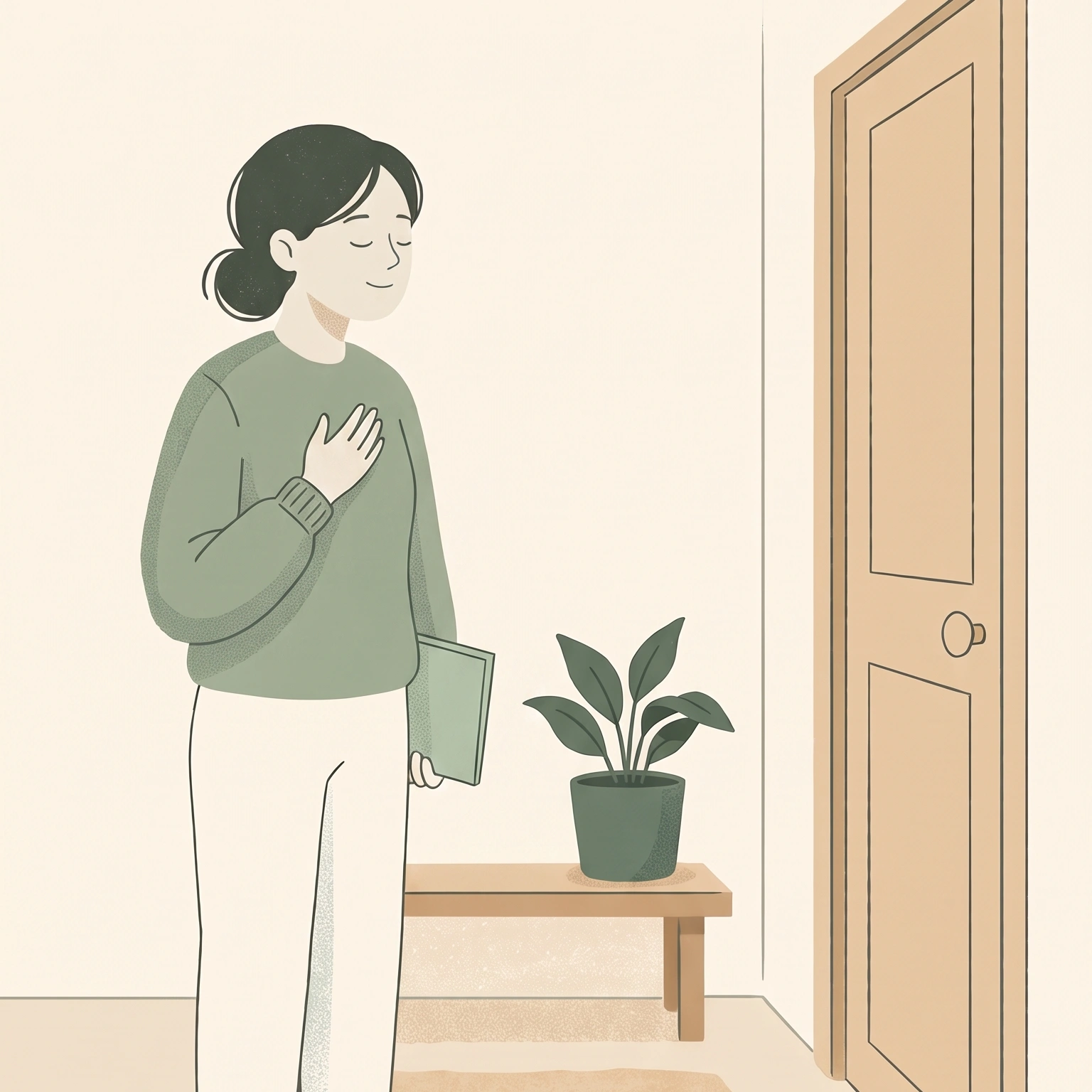
An exam, a presentation, a job interview, going on stage: each is a moment that matters, and you can't know exactly how it will go. Feeling nervous beforehand is a very human response.
Outside the door, the mind often runs on ahead into the room. It rehearses questions nobody has asked yet, sentences you haven't said, and every mistake you might make.
This page isn't about a diagnosis or a treatment. It's about small ways to look after yourself just before a moment that matters.
Your heart may race, your hands may sweat, or you might feel butterflies in your stomach. Sometimes your voice shakes, and sometimes things you know well seem to vanish from your head.
The nerves often start the day before: you struggle to sleep, can't face breakfast, or keep going over your notes until the last minute.
Feeling this doesn't mean you aren't ready. It only shows that this moment matters to you.
Each of these takes a minute or two, and you can do them standing up. You don't need to do them all; start with the one that feels right.
These come from “Before You Step Inside”, a session in the Telkin app. Repeat the ones that feel right silently outside the door, as you breathe out.
Outside the door, you may not want to read anything. “Before You Step Inside” in the Telkin app takes about two and a half minutes and works standing up with headphones: it helps you feel your feet on the ground and slow your breathing, and ends with these affirmations.
One image from the session: while you wait outside a door, the mind is like an impatient runner at the starting line. It wants to leap ahead, but your body is still right here.
Stopping at a set time in the evening instead of studying late into the night leaves some room for sleep. Packing what you need the night before keeps the morning's to-do list short.
If you're giving a presentation, saying your opening lines out loud a few times can make the first minute feel more familiar. Leaving early in the morning also takes away the stress of rushing on the way.
Breathing exercises: three techniques step by stepSomething you know well can suddenly slip away. It happens to a lot of people. Put your pen down, breathe out slowly once, and feel your feet on the floor.
In an exam, mark the question and move to one you know; you can come back to it later. In a presentation, it's fine to pause for a few seconds to check your notes or take a sip of water. Most listeners won't even notice the pause.
If nerves have started to make you avoid exams or presentations, or they begin days ahead and disrupt your sleep and appetite, we encourage you to talk to a professional. Your school's counselling service can be a good place to start.
If you're thinking about harming yourself, ask for help right away. Call your local emergency number; support lines for different countries are listed on our safety page.
Safety and crisis support“Before You Step Inside” in the Telkin app keeps you company for a few minutes outside the door as you step out of the what-ifs and back into the present.
 For iPhoneApp Store · Coming soon