
Breathing exercises: how to do 4-7-8 and box breathing
A breathing exercise means breathing in and out to a set rhythm. This page walks you through three simple techniques: calm breathing, box breathing and 4-7-8. You can try each one right here with the breathing timer.
Last updated:
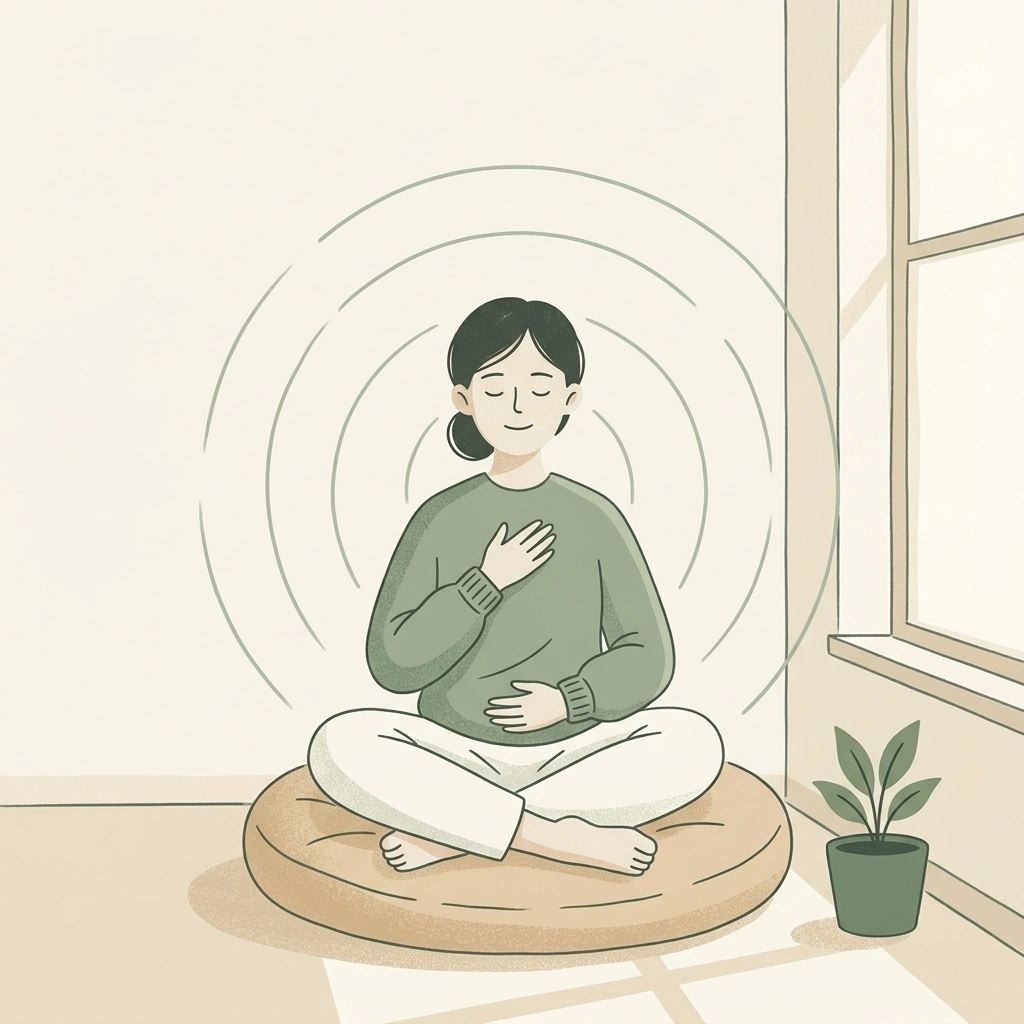
What is a breathing exercise?
Most of the time we breathe without noticing. In tense moments the breath tends to get short and fast. In a breathing exercise you slow it down on purpose and give it a steady rhythm.
Many people say they feel calmer when they make the out-breath longer. It varies from person to person, and a breathing exercise isn't a treatment; think of it as a short break of a few minutes.
Try it now
Pick a technique and press Start. Breathe in as the circle grows and out as it shrinks. When it stops, hold or pause as the label says.
Press Start when you're ready.
In for 4 seconds, out for 6. No holding; six breaths take one minute. The breathing break in the Telkin app uses this rhythm.
In for 4, hold for 4, out for 4, pause for 4. Four rounds.
In through the nose for 4, hold for 7, out through the mouth for 8. Four rounds to start.
How to do 4-7-8 breathing
- Breathe all the way outBreathe out through your mouth, letting the air go with a soft sound.
- Breathe in through your nose for 4With your mouth closed, count to four in your head.
- Hold for 7Hold your breath while you count to seven.
- Breathe out through your mouth for 8Breathe out slowly with a soft sound as you count to eight. That's one round; four rounds are enough to start.
How to do box breathing (4-4-4-4)
It gets its name from a square with four equal sides: every step lasts four seconds.
- Breathe in for 4Breathe through your nose, slowly and evenly.
- Hold for 4Keep the air in, without straining.
- Breathe out for 4Let it go at the same pace.
- Pause for 4Wait with the air out, then start again. Four rounds, or a minute or two, is enough.
Which one, and when?
Calm breathing is the easiest. There's no holding, so you can try it anywhere.
Box breathing has an even rhythm that suits moments when you want to gather your attention, for example before a meeting or an exam.
4-7-8 is often used before sleep because of its long out-breath. The hold is long, so it can feel hard at first; if it does, start with calm breathing.
Before sleep: sleep affirmationsWhat to watch for
If you feel dizzy or short of breath, stop and go back to breathing normally. You can also shorten the counts or skip the hold.
If holding your breath doesn't feel right, or you have a heart, lung or other health condition, talk to your doctor before trying techniques with a hold.
Don't do breath-holding exercises while driving or doing anything that needs your full attention.
Questions about breathing exercises
- How often should I do breathing exercises?
- There's no rule. Once or twice a day for a few minutes is plenty, and you can also use one in a tense moment or before sleep.
- What are the benefits of breathing exercises?
- Many people say they feel calmer and find it easier to focus after a breathing exercise. It doesn't work the same way for everyone, and it isn't a treatment; notice how it feels for you.
- Does 4-7-8 breathing help you fall asleep?
- We can't say it will put you to sleep. But turning your attention to your breath before bed can help you set your thoughts aside for a while.Sleep affirmations: 20 for bedtime
- Is there a breathing exercise in the Telkin app?
- Yes. The breathing break in the Telkin app keeps you company for one minute of calm breathing: a circle grows as you breathe in and shrinks as you breathe out.What is a guided audio session?
Take a breathing break on your phone.
The breathing break in the Telkin app keeps you company for one minute of six calm breaths.
 For iPhoneApp Store · Coming soon